Daily Log
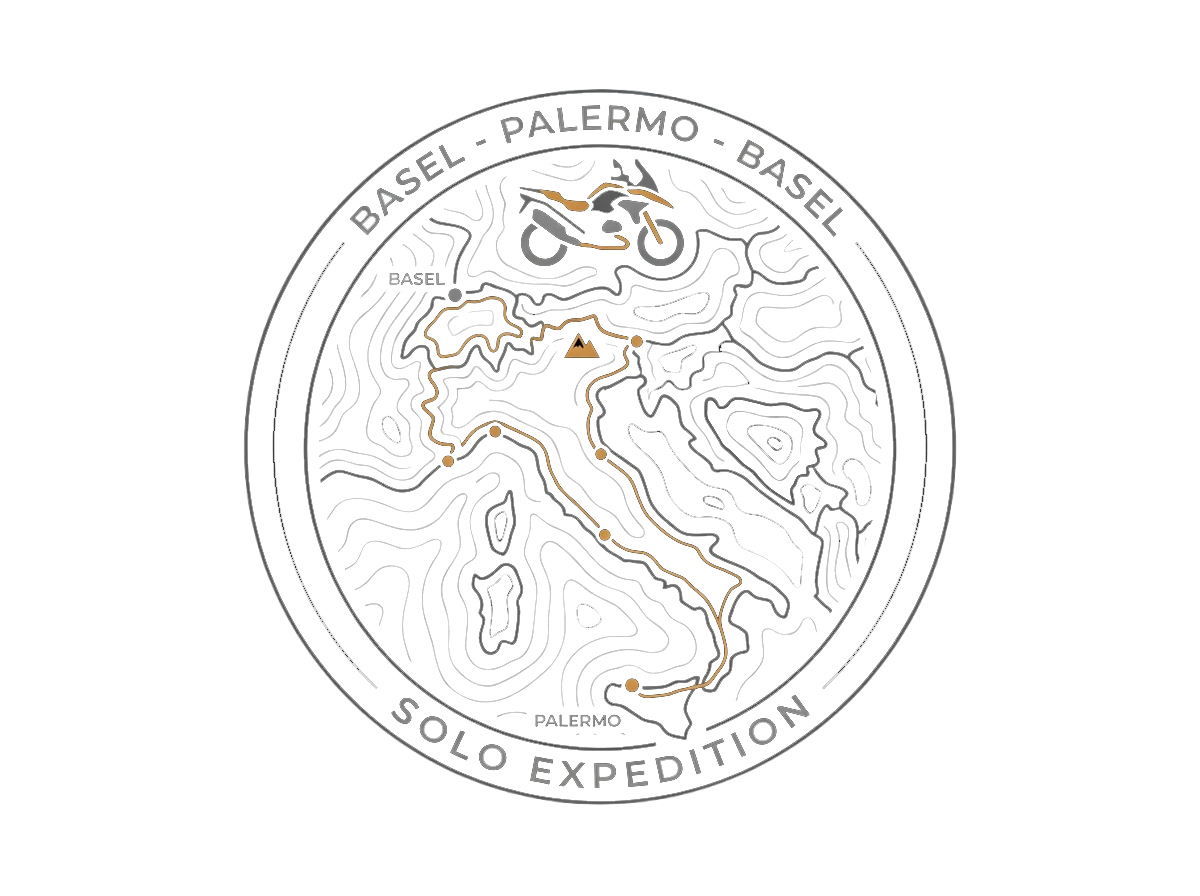
34 segments / The Long Circle South / 2026
Preparing the Ride
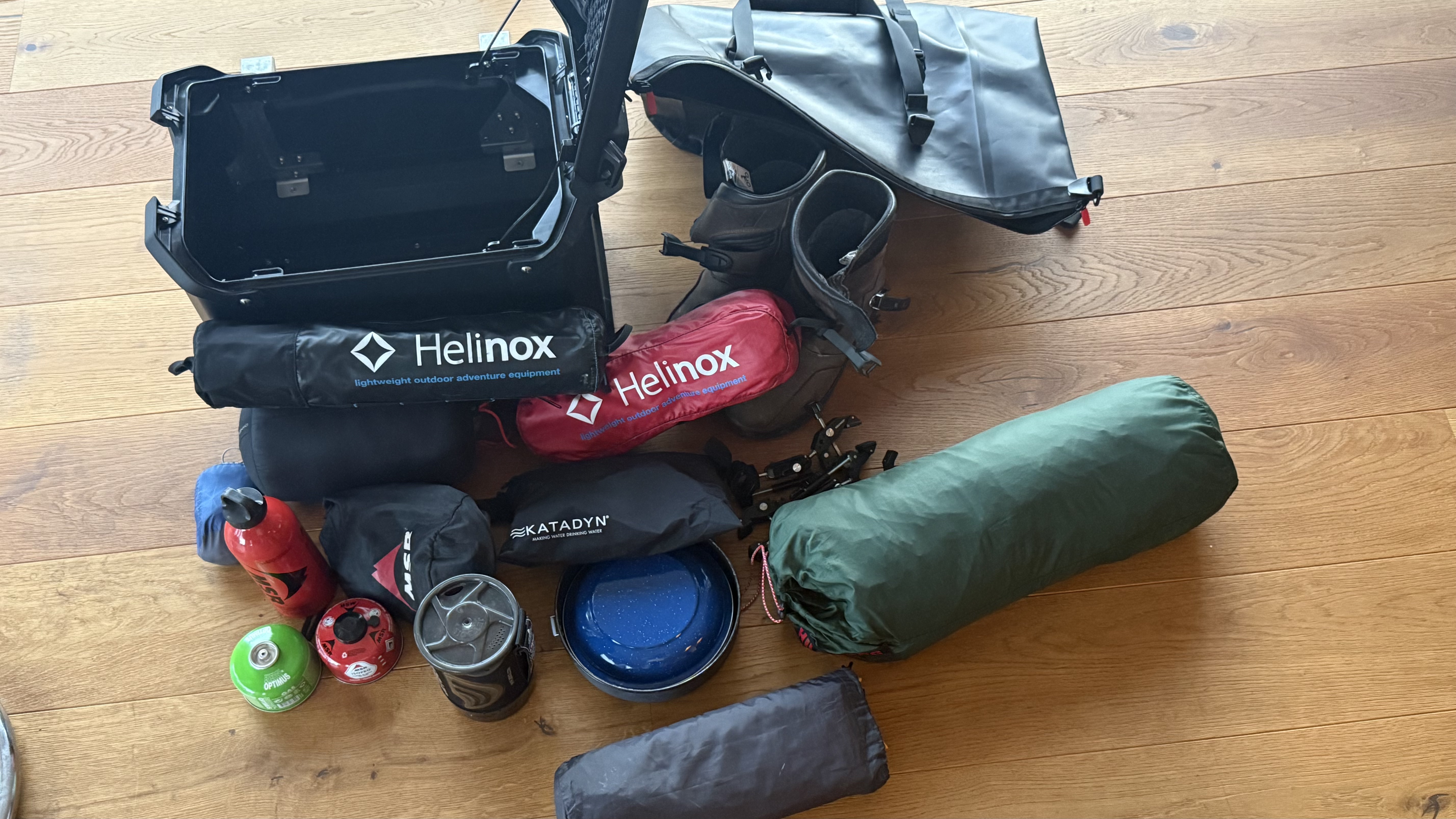
Getting ready to ride!
Preparing the Ride
The route is finalized. Every segment defined, every pass considered, every coastal deviation intentional. What was abstract is now concrete
Basel to Lugano
Leaving Schönenbuch, the route cuts southeast through the Swiss plateau, avoiding transit corridors in favor of smaller roads that allow a gradual exit from the familiar. The density of daily life gives way to space, rhythm, and forward motion. This section is not about distance. It is about separation.
Lugano - La Spezia
This route begins in Lugano, descending south along the eastern shore of Lake Como before cutting through the foothills toward the northern perimeter of Milan. It then continues across the Lombardy plains near Piacenza and transitions into the northern Apennine Mountains, where the terrain shifts to technical mountain riding with sustained elevation changes, dense forest, and isolated valleys. The final segment descends through Ligurian mountain corridors toward the Mediterranean coast, terminating in La Spezia. The ride combines alpine lakes, urban periphery, agricultural plains, and classic Apennine twisties, forming a continuous north–south transition from Switzerland to the Ligurian Sea.
La Spezia to Florence
This stage begins at the Mediterranean naval city of La Spezia and immediately climbs inland into the northern Apennine Mountains. The route avoids coastal highways and instead follows remote mountain roads through forested ridgelines and historic hill towns such as Sarzana and Piazza al Serchio, entering the wild, sparsely populated core of the Garfagnana region. From there, the ride becomes progressively more technical, crossing high Apennine passes with continuous elevation changes, tight switchbacks, and panoramic ridge sections. The terrain transitions from rugged alpine-Mediterranean forest to the gentler, cultivated hills of northern Tuscany, descending toward the cultural basin of Florence. This segment is defined by isolation, technical mountain riding, and a gradual transition from coastal Ligurian wilderness into the historic heartland of Tuscany, ending at one of Europe’s most significant Renaissance cities.
Florence
Florence is a deliberate pause at the cultural heart of Italy. After days defined by distance and movement, the city offers density instead—history layered in stone, streets built for walking rather than passing through. This rest day is not inactivity. It is recalibration. Time to step off the machine, move at human pace, and absorb the continuity between past and present. Florence represents permanence. The expedition continues, but here, forward motion briefly yields to perspective.
Florence to Rome
This stage departs from Florence and heads south into the Chianti hills, entering one of Italy’s most iconic riding landscapes defined by vineyards, cypress-lined ridges, and continuous flowing curves. The route bypasses major highways, instead traversing secondary mountain and rural roads through historic hill regions near Siena and the Val d’Orcia. Further south, the terrain becomes more remote and volcanic as the ride approaches the ancient Etruscan and medieval zones surrounding Orvieto and the highlands above Lake Bolsena. This section combines sweeping open countryside with technical inland mountain segments, offering long-distance visibility and minimal traffic. The final leg descends gradually into the Lazio region, transitioning from rural volcanic plateau into the expanding metropolitan perimeter of Rome. The stage concludes at the historic capital, marking the transition from Tuscany’s pastoral highlands to the political and cultural center of Italy.
Rome
Rome marks a psychological midpoint. The southbound trajectory becomes tangible here—the Alps are behind, Sicily is no longer abstract. This rest day is reserved to slow down inside the scale of history. To walk without destination, reset physically, and prepare mentally for the deeper push into southern Italy. Rome is not a stop to see everything. It is a place to absorb weight, continuity, and the awareness that the expedition is now fully underway.
Rome - Positano
This stage departs from Rome and quickly leaves the urban environment, entering the coastal plains and low mountain ridges south of the capital. The route follows secondary inland roads parallel to the Tyrrhenian coastline, passing through agricultural lowlands and historic corridor towns near Latina, where the terrain alternates between flat expanses and low, winding hill sections. Further south, the ride becomes more technical as it approaches the volcanic and mountainous transition zone between Lazio and Campania, with sustained curves and ridge crossings above the coastal belt near Gaeta and Mondragone. This section offers views toward the Tyrrhenian Sea while remaining largely inland on quieter, rider-focused roads. The final segment enters the dense historical and volcanic landscape surrounding Naples, with the silhouette of Mount Vesuvius dominating the approach. The stage concludes along the Gulf of Naples near Salerno, marking the transition into southern Italy and the gateway to the Amalfi Coast and deeper Mediterranean terrain.
Positano
Positano marks the transition between the long southbound descent and the final crossing to Sicily. Built vertically into the cliffs, the town unfolds downward toward the sea in layers of stone, color, and narrow passages shaped long before modern roads existed. The Amalfi Coast itself is not defined by distance, but by intensity. The road is narrow, technical, and constantly exposed—cut into rock above open water. Every kilometer demands presence. There is no autopilot here. This rest day allows separation from the rhythm of transit. Time to walk instead of ride. To experience the coastline at human speed. Fishing boats moving at dawn. Church bells marking the day. The scent of lemon groves carried inland from the terraces above the sea. Positano is both a destination and a threshold. Beyond it lies the crossing to Sicily and the southernmost point of the expedition.
Positano - Tropea
Leaving Positano marks the definitive departure from the Amalfi Coast and the transition into the deep south. The road moves inland briefly, then returns to the Tyrrhenian shoreline, where the terrain becomes harsher, quieter, and more exposed. Traffic thins. Infrastructure fades. The ride becomes less curated and more elemental. Crossing into Calabria carries a different atmosphere. This is no longer a destination region. It is a transit frontier. Long, fast coastal sections alternate with technical inland segments shaped by mountains that fall directly into the sea. Arrival in Tropea brings the first direct visual contact with Sicily across the Strait of Messina. The island is now visible. The southern objective is no longer abstract.
Tropea
Tropea is the threshold. Perched high above the Tyrrhenian Sea, the town feels suspended between mainland Italy and Sicily, which lies just beyond the horizon. This is a place to pause deliberately before the crossing. The rhythm here is slower and more authentic. Narrow streets, weathered facades, and daily life unfolding without performance. The sea dominates everything — constant, luminous, and calm. This rest day is about recovery and observation. Walking the old town. Sitting above the water. Resetting body and mind after the long descent through Italy. From here, the journey turns decisively toward Sicily.
Tropea - Syracuse
This stage begins with the ferry crossing from mainland Italy to Messina, marking the definitive transition onto the island. From there, the route follows Sicily’s eastern coastline southbound, keeping the Ionian Sea constantly in view. The road runs beneath the presence of Mount Etna, Europe’s most active volcano, whose mass dominates the inland horizon. The terrain alternates between coastal exposure and volcanic foothills, passing historic coastal cities including Catania and continuing toward the quieter southeastern edge of the island. The stage concludes near Syracuse, where the density drops and the landscape opens. This marks the final continental displacement. Beyond this point, there is no further south to ride.
Syracuse
Syracuse represents the southern threshold of the expedition. It is one of the oldest continuously inhabited cities in Europe, positioned at the edge of the island where land, history, and sea converge. A planned stop here creates a deliberate pause before the final westbound phase toward Palermo. Syracuse offers distance from the mainland, distance from the starting point, and the psychological confirmation of full geographic displacement. The day is reserved to remain stationary, consolidate the journey so far, and prepare for the final traversal across Sicily.
Syracusa - Palermo
This stage crosses Sicily from Syracuse westward along the island’s southern edge, following remote coastal roads shaped by exposure, heat, and distance. The route passes quiet Mediterranean towns such as Licata before turning inland through Sicily’s mountainous interior, where the terrain becomes more rugged and isolated. The stage arrives in Palermo, marking the southern turning point of the expedition. From here, the direction reverses. The return phase begins, tracing a new path north along Italy’s eastern coastline back toward Basel.
Palermo
Palermo
Palermo
Palermo marks the turning point of the expedition. The southern objective is reached. Forward motion pauses. This stay is different. It is not defined by distance or terrain, but by reunion. Alex and Annick will arrive here, bridging the separation created by the journey. For a brief moment, the expedition intersects with home. Palermo becomes a point of convergence. A place to remain still before the direction reverses and the return north begins.
Palermo - Messina
This stage departs Palermo and turns east, beginning the northbound return phase. Instead of following the faster coastal corridor, the route cuts inland across Sicily’s mountainous interior, traversing remote ridgelines and isolated hill regions where elevation and terrain dominate the experience. The road gradually descends toward the northern coastline near Messina, completing the full east–west island crossing. This stage closes the Sicily chapter and positions the expedition for the ferry crossing back to mainland Italy and the continuation north along the Adriatic axis.
Messino - Soverato
This stage begins with the ferry crossing from Messina back to mainland Italy, re-entering the continent at its southernmost edge. Instead of following the coast, the route turns inland into the remote mountain ranges of Calabria, where narrow roads climb through dense forest, isolated villages, and high ridgelines far removed from transit corridors. The terrain here is slower, more technical, and deliberately chosen for isolation. The stage gradually descends toward the Ionian side near Soverato, marking the transition to the eastern coastline and the beginning of the sustained northbound return along Italy’s Adriatic axis.
Soverato - Policoro
This stage continues north from Soverato along the Ionian coastline, following quiet coastal roads and exposed shoreline corridors. The route passes through remote eastern Calabria, including the coastal plains near Crotone, where the landscape opens and the sea remains constantly present. Further north, the road turns inland into the mountainous interior near the Sila National Park region, transitioning from coastal exposure to elevated forest terrain and isolated highland riding. This stage reinforces the northbound return trajectory while maintaining maximum terrain diversity between coastline and mountain interior.
Policoro - Gallipoli
This stage continues north along Italy’s eastern edge, following the Ionian coastline into the Apulia region. Departing Policoro, the route traces the wide arc of the Gulf of Taranto, where long coastal exposures alternate with quiet inland connectors. The road passes near Taranto before turning south along the Salento peninsula, a narrow extension of land surrounded by open sea. The stage concludes in Gallipoli, positioned at the western edge of Italy’s southeastern extremity. This section marks the transition from Calabria’s mountainous isolation to Apulia’s open coastal plains and maritime horizon.
Gallipolli, Italy
Gallipoli marks the southeastern edge of the mainland and a natural pause before the sustained northbound return. Its historic center, isolated on a small island and surrounded by open sea, creates a clear separation from transit and forward motion. This rest day provides a controlled reset at the geographic edge of the expedition before continuing along the Adriatic coast.
Gallipolli - Carovigno
This stage completes the full perimeter traversal of the Salento peninsula. Departing Gallipoli, the route continues south to the terminal point at Santa Maria di Leuca, marking the southeastern extremity of mainland Italy where the Ionian and Adriatic seas converge. From there, the direction turns north along the Adriatic edge, following continuous coastal roads through exposed maritime terrain and isolated shoreline corridors. The route passes the eastern threshold at Otranto and continues along the coast toward Brindisi, which serves as the northbound exit point from the peninsula. This stage establishes geographic closure of Italy’s southern mainland extremities and reinforces the expedition principle of tracing continental edges rather than inland shortcuts.
Carovigno
Rest day in Brindisi. A planned pause to remain stationary and step outside the expedition structure. Annick and Norman, close friends of the family, will be here. The day is reserved for reunion, conversation, and presence without distance or direction. Movement resumes the following day along the Adriatic ascent north.
Carovigno - Termoli
Departing Ostuni, the route begins in the ordered calm of olive groves and white hill towns before descending toward the Adriatic corridor. The early section flows past historic maritime cities, including the outskirts of Bari, where the landscape reflects centuries of trade and coastal settlement. Further north, density fades and the road becomes more exposed. Civilization gradually thins as the route approaches the edge of the Gargano Peninsula. The final kilometers toward Lesina are defined by open horizons, salt lagoons, and a sense of entering a more remote, elemental environment — a clear transition from cultivated south to the wild character of Gargano.
Lesina - San Bendetto del Tronto
This segment follows the Adriatic northward, where the character of the coast becomes more varied and expressive. Leaving the Gargano behind, the road alternates between open shoreline and elevated stretches above the sea, especially along the Costa dei Trabocchi, where old fishing structures stand suspended over the water like artifacts from another era. The route avoids the direct coastal highway at times, turning inland briefly to maintain rhythm and solitude, before returning again to the sea. San Benedetto del Tronto marks a natural pause point — a place defined by long promenades, wide horizons, and the sense of having progressed meaningfully along the spine of Italy’s eastern edge.
San Benedetto del Tronto - Rimini
This segment departs San Benedetto and briefly leaves the Adriatic coastline, climbing into the quieter inland hills of Le Marche. The road trades open sea views for rolling countryside, small hill towns, and more technical riding, before descending again toward the coast north of Ancona. From there, the route stabilizes along the Adriatic shoreline and continues smoothly to Rimini, marking the final coastal stop before turning inland toward the Dolomites.
Rimini to Bassano del Grappa
Leaving the Adriatic behind, the route turns inland through the flat agricultural plains of Emilia-Romagna, passing Ravenna and Ferrara before gradually moving into quieter rural roads. The landscape shifts almost imperceptibly at first, from coastal lowlands to the structured geometry of northern Italy’s interior. As Padova falls behind, the horizon begins to change. The first foothills appear, roads tighten, and the approach to Bassano del Grappa signals the true gateway to the Dolomites and the Alpine phase of the journey.
Bassano del Grappa - Vipiteno
This segment extends the Dolomite crossing into the threshold of the central Alps. The ride north from Bolzano becomes progressively narrower and more alpine, culminating in Vipiteno, a historic mountain town just below Brenner Pass. Stopping here preserves the sense of arrival into the high Alps while avoiding the busier transit corridor beyond, and sets up a clean, purposeful crossing into Austria the following morning.
Vipiteno - St. Moritz
This is the decisive alpine crossing. Stelvio delivers the most iconic ascent of the entire journey, followed by the quieter and more elegant descent via Umbrail into Switzerland. The transition into the Engadin valley is immediate and unmistakable—wide, open, and calm. Arrival in St. Moritz marks the psychological return to Switzerland while preserving full alpine immersion.
St Moritz
St. Moritz serves as the final high-alpine pause before re-entering western Switzerland. Located in the Engadin valley at 1,800 m, it combines open mountain space, controlled stillness, and clear air. The lake provides a natural focal point for reflection, while the surrounding passes—Julier, Bernina, and Albula—frame the terrain that has defined the journey. This rest day allows physical recovery, equipment reset, and mental consolidation before the final westbound traverse toward Andermatt and Basel.
St Moritz - Andermatt
The route from St. Moritz to Andermatt crosses the central alpine spine one final time. Leaving the Engadin via the Julier Pass, the landscape transitions from wide, open high-valley expanses into tighter, more technical terrain. The ascent over Oberalp Pass marks the symbolic re-entry into the inner Alps, where roads narrow, air cools, and the environment becomes quieter and more elemental. Andermatt serves as the natural final alpine station. Positioned at the intersection of multiple historic passes—Furka, Gotthard, and Oberalp—it represents the geographic and psychological gateway back toward home. One last night here provides closure to the alpine phase of the journey, allowing rest, reflection, and preparation for the final descent out of the mountains and back to Schönenbuch.
The final stretch home — from alpine silence back into the familiar lowlands
Departing Andermatt, the route descends from the high alpine environment into progressively softer terrain. The sharp vertical drama of the mountains gives way to the deep blues of Lake Lucerne, where the road traces the shoreline beneath steep rock faces and quiet villages. Beyond the lake, the landscape opens into the rolling agricultural heart of central Switzerland. The rhythm of the ride becomes calmer and more reflective as forests and farmland replace alpine exposure. Passing through the quiet interior toward northwest Switzerland, the final kilometers approach Basel and ultimately return to Schönenbuch — completing the full arc of the journey, from home into distance, and back again.