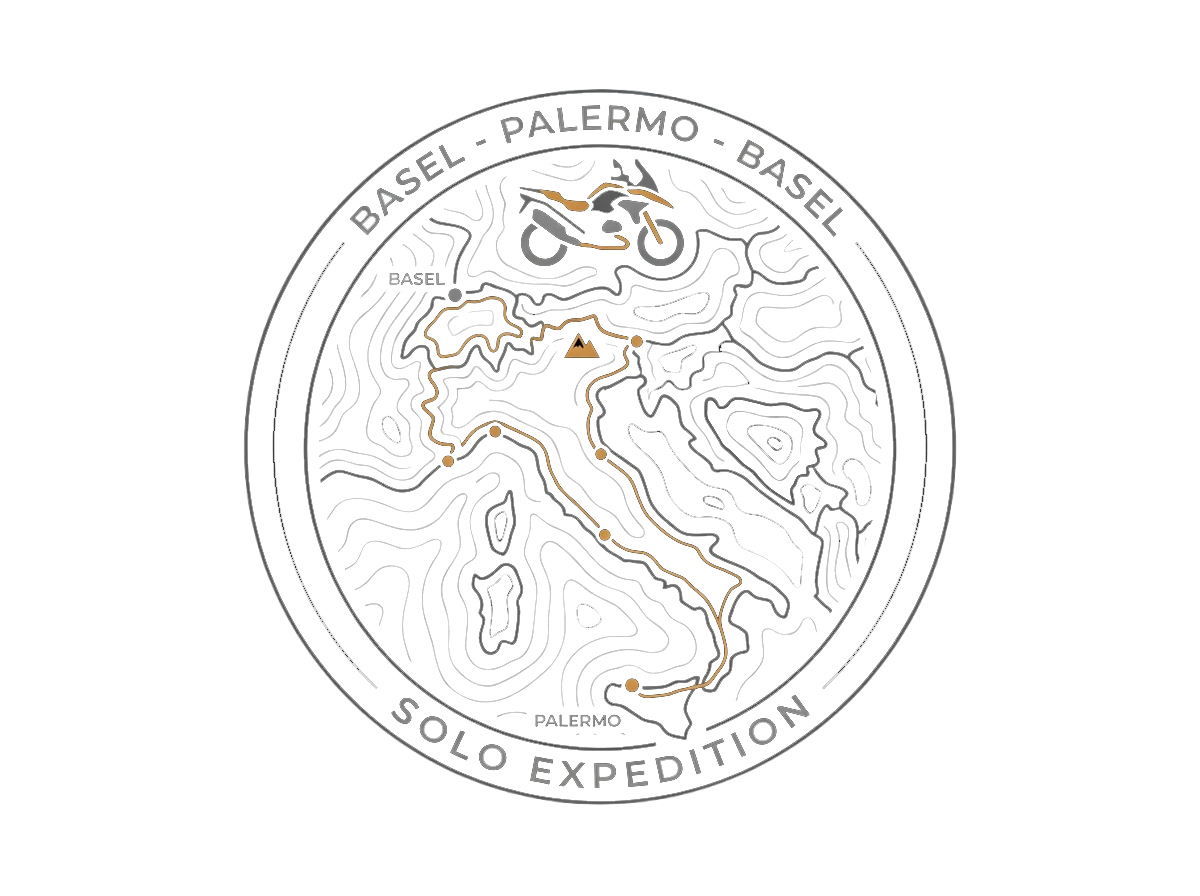
The Dolomites were not just scenic today — they completely changed the rhythm of the expedition. After weeks of heat, coastlines and operational chaos, the mountains finally delivered the scale, silence and technical riding Long Circle South had been building toward.
Stone Cathedrals
Today was one of those rare riding days where the road itself becomes the destination.
After weeks of heat, coastal density, operational improvisation, dead ends, ferries, thunderstorms, road closures and endless transitions across southern Italy, the Dolomites finally appeared on the horizon — and immediately changed the rhythm of the expedition.
The roads stopped being transport corridors and became terrain.
The climb into the mountains unfolded in layers. Forest valleys tightened into stone corridors. Narrow roads suddenly opened into massive alpine basins. Every pass revealed another wall of rock behind it, larger and sharper than the last. The Dolomites do not feel like normal mountains. They rise abruptly, almost unnaturally, like gigantic broken cathedrals pushed out of the earth.
And unlike many famous motorcycle routes, this day never collapsed into postcard tourism alone.
The route constantly evolved: tight technical switchbacks, dark pine forests, open ridgelines, small alpine villages, cold air pockets, and long flowing descents before the next climb began again.
The riding itself became immersive rather than interrupted.
At moments the scale became difficult to process. The mountains stopped looking scenic and started feeling geological — enormous vertical stone structures towering over roads that suddenly seemed impossibly small. After the flatter landscapes of the Adriatic coast and Po Delta, the psychological impact was amplified even further. The mountains felt larger because the expedition had earned them.
The BMW, still carrying Sicilian dust and the operational scars of nearly a month on the road, finally looked like it belonged to an actual crossing rather than a vacation.
By late afternoon the intensity slowly eased. The final section northward relaxed into calmer alpine valleys and cooler evening air. The expedition decompressing after sustained mountain concentration.
And then came the refuge: Thuinerwaldele.
A quiet South Tyrolean shelter with timber balconies, flower boxes and cold mountain air replacing the Mediterranean heat that had followed the expedition for weeks. Not a finish line. Not triumph. Just temporary refuge at the edge of the high Alps.
Tomorrow the circle closes.
But today belonged entirely to the mountains.