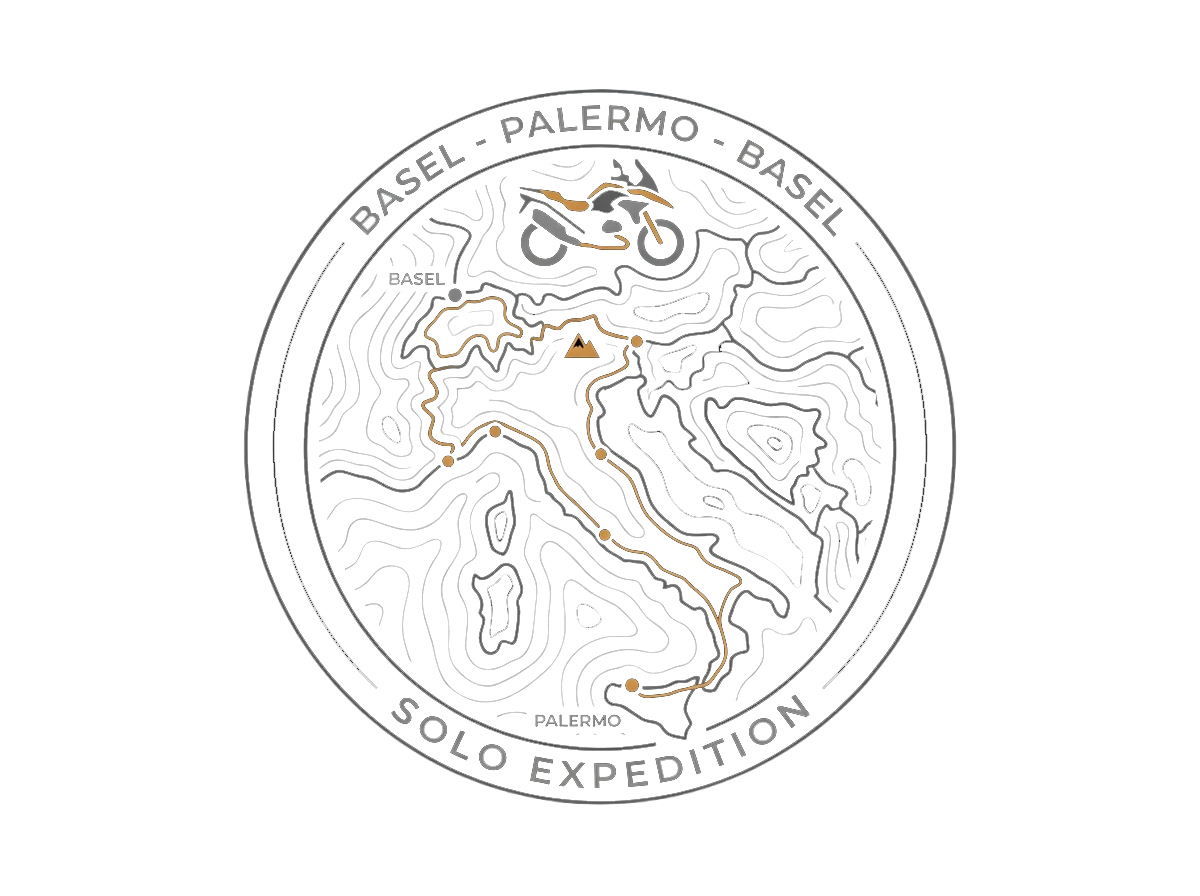
Scenic inland motorcycle stage from Florence to Rome via Chianti, Val d’Orcia, and the volcanic plateau around Lake Bolsena—designed to avoid the A1 and arrive in the Eternal City through central Italy’s most iconic backroads.
From Siena to the Edge of Rome: Riding the Spine of Italy — and Knowing When to Stop
The line on the map looks simple. It isn’t.
South of Siena, the character of the ride shifts immediately. The soft, postcard curves of Tuscany tighten into something more deliberate. The road begins to carve through hills rather than flow over them. Fewer tourists, fewer perfect viewpoints, more raw terrain. This is where the ride becomes quieter—and more honest.
The early stretch carries you through fragmented farmland and rolling ridgelines, where the asphalt is good but no longer forgiving. Corners demand attention. Elevation changes come sharper than expected. The landscape feels less curated, more lived-in. It’s a transition zone—geographically and mentally.
Approaching the Umbrian edge, the roads narrow further. Villages appear suddenly, perched above valleys, then disappear just as quickly. There’s a rhythm: climb, descend, tighten, release. No long straights. No autopilot. The bike works. You work.
The route bends, threads between lakes and ridges, then commits south again. Traffic stays light. The surface varies—mostly solid, occasionally broken, just enough to keep focus high. It’s the kind of riding that rewards patience over speed. No hero lines. Just precision.
As Rome begins to pull closer, the tension builds. Not visually at first, but structurally. Roads widen. Intersections multiply. The sense of isolation fades. You feel the system again, movement, density, friction. After hours of controlled solitude, it’s abrupt.
Then Rome.
Not entered cleanly. Not welcomed gradually. It hits. Traffic compresses, navigation becomes tactical, and the final kilometers demand more awareness than the previous hundred. It’s chaotic, but not random. There’s a logic underneath—fast, aggressive, but readable if you commit to it.
And then, just as quickly, you’re through it.
South of the city, the air shifts again. Less pressure. Fewer vehicles. The road opens slightly, carrying you toward the coast. The final stretch feels like release, not because it’s easy, but because it’s earned.
And this is where the plan changes.
Not because of failure. Because of conditions.
Rain moves in. Not a passing inconvenience, but a multi-day system. Riding through it would turn precision into risk, flow into fatigue. So the ride pauses—not on the roadside, but deliberately—at Corte in Fiore.
This is not just accommodation. It’s a reset point.
Positioned just south of Rome, it sits outside the pressure zone. Close enough to have crossed the system, far enough to disconnect from it. The terrain flattens. The noise drops. After the intensity of inland riding, everything here slows down.
The logic shifts: Movement → stillness Execution → recovery Route → reflection
The body catches up. The mind recalibrates. The bike rests.
In a trip defined by motion, this becomes part of the structure. Not an interruption—an integration.
The road forces movement. The rain enforces stillness. Both belong to the same journey.
This segment isn’t just about what was ridden. It’s about recognizing when not to ride—and turning that into advantage.
The south will wait.